Must-Have Items for a New Apartment: 2026 Checklist

Table of Contents
- How to Prioritize Your New Apartment Items by Move-In Timeline
- Apartment Kitchen Essentials You Will Actually Use
- Bathroom and Bedroom Must-Haves for a Fresh Start
- Small Apartment Organization Hacks That Save Space
- Apartment Safety Checklist for Renters
- Budget-Friendly Sourcing and Eco-Friendly Alternatives
- Living Room, Dining Area, and Laundry Room Essentials
- Frequently Asked Questions
Last Updated: September 29, 2026
How to Prioritize Your New Apartment Items by Move-In Timeline
The smartest way to shop for new apartment items is to sort every purchase into three buckets: night one, first week, and first month.
Here is a simple priority framework:
- Night one: bed, bedding, towel, hand soap, toilet paper, one pot, one pan, trash bags
- First week: shower curtain, bath mat, cleaning supplies, food storage, plunger, basic toolkit
- First month: decor, extra storage, a full-length mirror, lighting upgrades
That said, most renters overspend in week one on decor and underspend on the boring stuff that prevents real problems, like a plunger, a flashlight, and a fire extinguisher.
Apartment Kitchen Essentials You Will Actually Use
Apartment kitchen essentials come down to a short list: cookware, kitchenware, food storage, and cleaning supplies. Skip the 20-piece sets. A small kitchen rewards fewer, better tools.
Cookware and Kitchenware Basics
Start with a 10-inch skillet, a 2-quart saucepan, a sheet pan, a chef's knife, a cutting board, a can opener, and a colander. Add a mixing bowl, a spatula, and a set of utensils.
Food Storage and Cleaning Supplies
Food storage containers keep leftovers fresh and cut down on takeout. Buy a stackable set with matching lids so they nest in a tight cabinet.
Bathroom and Bedroom Must-Haves for a Fresh Start
Bathroom and bedroom items set up your daily routine, so buy these before decor. A shower curtain, bath mat, toiletries, and bedding cover the basics.
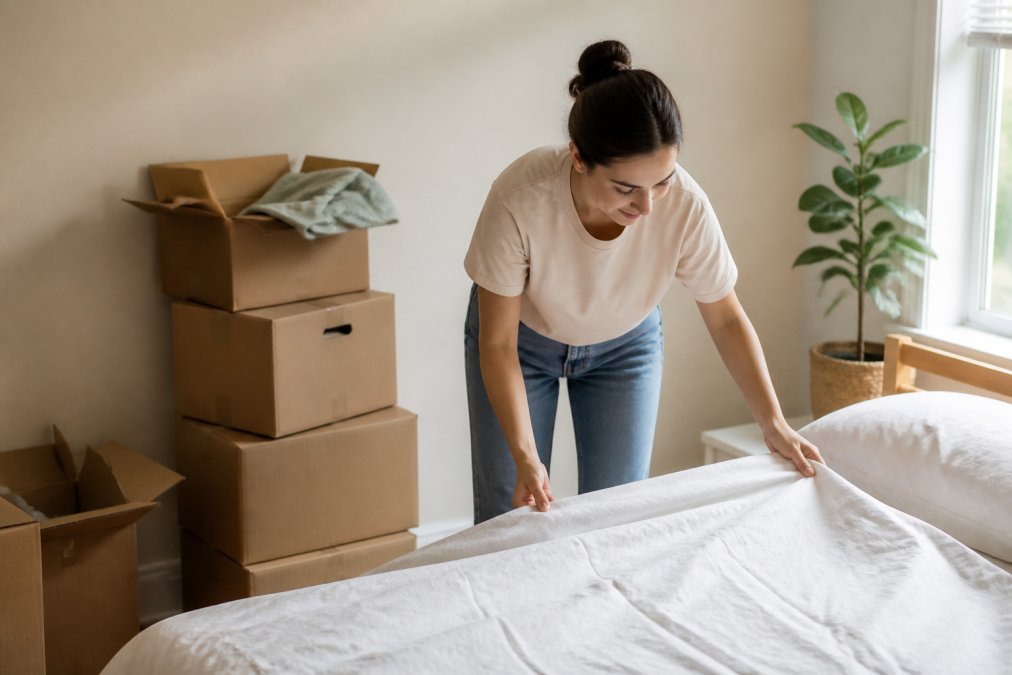
Bedding basics:
- Two sets of sheets so you can swap and wash
- A comforter or duvet
- Two pillows per sleeper
- A mattress protector
Small Apartment Organization Hacks That Save Space
Small apartment organization hacks work by using vertical space and stacking instead of spreading out. Storage solutions that go up, not out, are the ones that last.
Try these renter-friendly moves:
- Over-the-door hooks for coats, towels, and bags
- Stackable bins for closets and under-bed storage
- A foldable shoe rack that collapses when not in use
- Command strips instead of nails to protect your deposit
- A slim rolling cart for the kitchen or bathroom
Apartment Safety Checklist for Renters
An apartment safety checklist is less about buying gear and more about knowing where it goes, when to test it, and who is responsible when something fails. Renters have a landlord for structural systems and a personal duty for the items they bring in. Sort your safety setup the same way.
What your landlord owns (report, don't replace):
- Smoke alarms and carbon monoxide detectors in units that have fuel-burning appliances or attached garages
- The electrical panel, outlets, and any hardwired fixtures
- Water heaters, HVAC, and gas lines
- Building fire extinguishers in common areas and sprinkler systems
What you own (buy in week one):
- A multipurpose fire extinguisher rated for kitchen use (look for an ABC rating on the label) and stored within reach of the stove, not directly over it
- A carbon monoxide detector if your unit has a gas stove, gas heat, or an attached garage
- A basic toolkit: screwdriver with interchangeable bits, hammer, adjustable wrench, pliers, tape measure, and a roll of duct tape
- A flashlight plus spare batteries, kept somewhere you can find in the dark
- A first aid kit with bandages, gauze, antiseptic, and any personal medication
- A plunger for each bathroom
Test on day one, then set a cadence.
Know your shut-offs before you need them.
Build a small go-bag.
Budget-Friendly Sourcing and Eco-Friendly Alternatives
Most apartment checklists tell you what to buy. Almost none tell you how to buy it without draining your first paycheck. That is the real gap, and it is where a smart renter saves the most.
Source in the right order
Buy in three waves, matched to your move-in timeline:
- Night one (buy new, buy cheap): toilet paper, hand soap, a towel, a set of sheets, one pot, one pan, trash bags. These are hygiene and sleep items, do not wait on a deal.
- First month (buy used where it makes sense): bed frame, dining table, coffee table, bookshelf, lamps, storage bins. Furniture and hard goods hold up well secondhand and lose value fast when new.
- First quarter (wait for sales): mattress, sofa, cookware sets, vacuum. These are the items where quality matters and where seasonal sales actually move the price.
Where to source affordably
- Secondhand marketplaces: Facebook Marketplace, Craigslist, OfferUp, and Nextdoor are where moving-out renters dump furniture at a fraction of retail. Search by neighborhood and set alerts for the specific items on your list.
- Thrift and consignment stores: Goodwill, Salvation Army, and local consignment shops are strongest for kitchenware, lamps, small tables, and decor. Inventory turns over weekly, so check back.
- Buy-nothing groups: Local Buy Nothing Project groups and neighborhood free-cycle boards give away usable items for free. You will need to pick up quickly, most posts go within hours.
- Estate and moving sales: Often the best source for solid wood furniture and full kitchen setups at once.
- Retail clearance and open-box: Big-box stores and online retailers discount open-box and floor-model items heavily. Check the return policy before buying.
What not to buy used
Some items are worth buying new even on a tight budget: mattresses (hygiene and pest risk), upholstered sofas from unknown homes (bedbugs), pillows, and anything with a safety function like a fire extinguisher or carbon monoxide detector. The savings are not worth the risk.
Eco-friendly swaps that also save money
Sustainability and frugality overlap more than people expect. These swaps pay for themselves:
- Reusable microfiber cloths replace paper towels for most cleaning. A pack of a dozen lasts years.
- Concentrated cleaners you dilute at home cut packaging and cost per use dramatically versus ready-to-use sprays.
- Glass food storage containers replace plastic wrap and foil, and they do not stain or hold odors the way plastic does.
- A reusable water bottle and coffee cup eliminate the single-use versions you would otherwise rebuy weekly.
- Cloth napkins and dish towels replace paper napkins and paper towels at meals.
- Wool dryer balls replace dryer sheets and shorten drying time.
- A drying rack replaces some dryer cycles entirely, which cuts both energy use and wear on your clothes.
The mistake that costs the most
Buying everything new on day one. Spreading purchases across two or three paychecks lets you wait for sales, accept hand-me-downs, and skip items you realize you never needed. A common pattern among first-time renters is to spend the most in week one on decor and the least on the boring items, a plunger, a flashlight, a fire extinguisher, that actually prevent expensive problems.
Buy Nothing Project local group finder
Living Room, Dining Area, and Laundry Room Essentials
Living room, dining area, and laundry room items come last because you can live without them for a few weeks. Buy these once the essentials are handled.
Frequently Asked Questions
What safety items do I need in my first apartment?
At minimum, get a fire extinguisher, a carbon monoxide detector, a first-aid kit, and a plunger. Check that smoke detectors work and know where your unit's water shut-off valve is. A small toolkit with a screwdriver, hammer, and adjustable wrench handles most minor fixes. For renters, a door stopper or security bar adds peace of mind. Build your apartment safety checklist around fire, water, and basic medical needs first, then add items as your budget allows.
What kitchen basics are truly necessary for a first apartment?
Focus on cookware you will use daily: a skillet, a saucepan, a baking sheet, and a chef's knife. Add a cutting board, mixing bowls, and food storage containers. For small kitchens, stackable pots and nesting bowls save cabinet space. You do not need a full set of every gadget. Start with the apartment kitchen essentials that match how you actually cook, then expand. A microwave and a coffee maker cover most quick meals and mornings.
How do I organize a small apartment on a budget?
Use vertical space with wall shelves, over-the-door hooks, and stackable bins. Under-bed storage containers hold off-season clothing and extra bedding. A tension rod in a closet doubles hanging space. Look for multi-purpose furniture like an ottoman with storage or a foldable dining table. Thrift stores and online marketplaces often have these small apartment organization hacks for less. Measure your space before buying anything so you avoid returns and clutter.
What are the most overlooked items when moving into a new apartment?
People forget a shower curtain and liner, a toilet plunger, trash bags, and light bulbs. A full-length mirror, mattress topper, and basic toolkit also get missed. Cleaning supplies like microfiber cloths, dish soap, and paper towels are needed on day one. A small emergency kit with bandages and pain reliever is easy to overlook. Keep a move-in box with toilet paper, hand soap, and a snack so you are not searching through boxes your first night.
Moving into a first apartment means juggling a long list, a tight budget, and limited space. Happistore helps you cut through the noise with a curated range of home utility and organization products built for small spaces, from stackable storage to practical kitchen and bathroom tools. Every item is chosen to simplify your routine, not add clutter. Get started with Happistore and set up your new apartment with gear that earns its place.